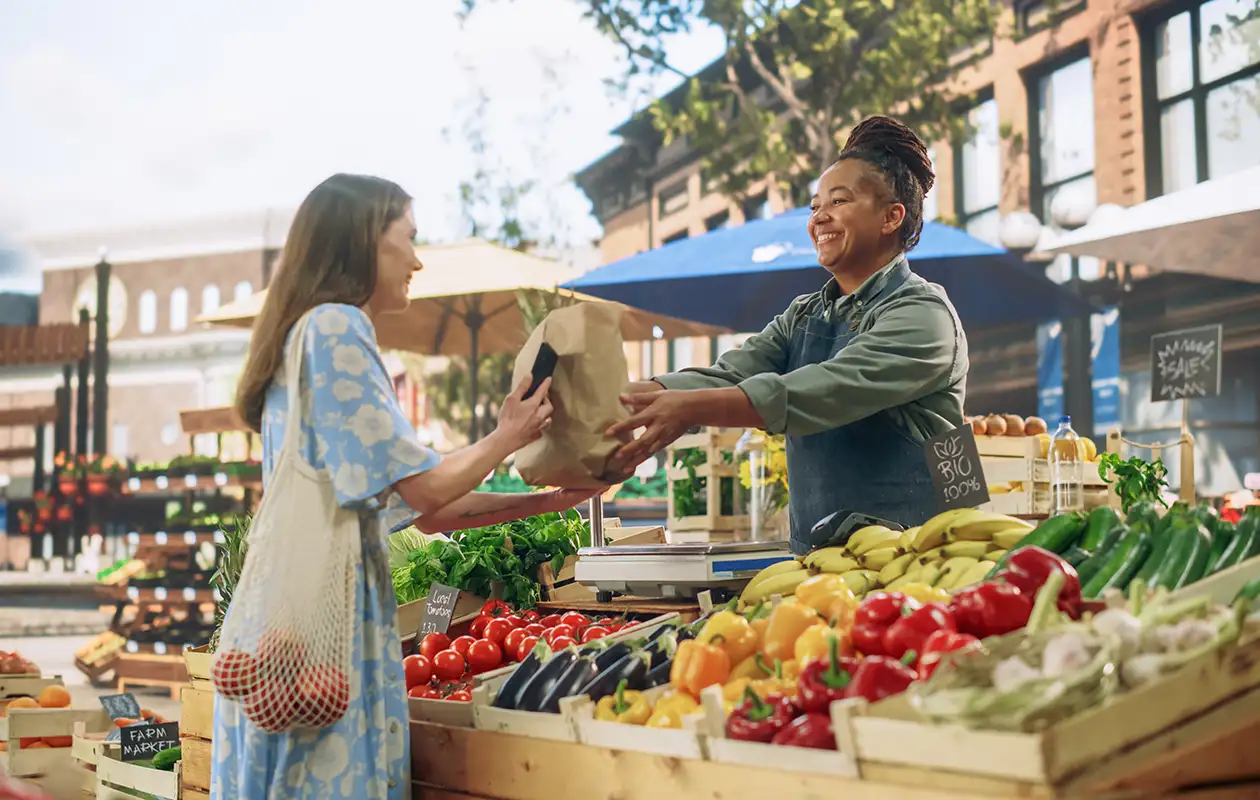
Cucina di Madre Terra | Local Food Thought Leadership
By Frank Webb, May 10, 2026
Everyone Says They Support Local Farms. So Why Don’t We?
The uncomfortable gap between what people say they value and how they actually eat, shop, and dine.
Almost everyone supports local farms in theory.
Ask people if they believe in fresh food, family farms, small producers, farmers markets, heritage ingredients, sustainable practices, and farm-to-table restaurants, and the answer is usually yes.
Of course they do.
They want better food. They want healthier communities. They want working farms to survive. They want chefs to use real ingredients. They want local economies to thrive. They want their food choices to mean something.
At least, that is what people say.
But the harder question is not what people believe.
The harder question is what they actually do.
Do they buy from the farmer? Do they visit the market? Do they choose the restaurant that sources locally? Do they ask where the food came from? Do they pay a little more when the money stays closer to home? Do they change their routines? Do they make local food part of their weekly life?
That is where the farm-to-table conversation becomes more complicated.
Because many people talk the talk about supporting local producers. Far fewer consistently walk the walk.
That does not mean people are dishonest. It means the modern food system has made belief easy and participation harder.
At Cucina di Madre Terra, we believe this is one of the most important conversations in local food today:
How do we move people from local food admiration to local food participation?
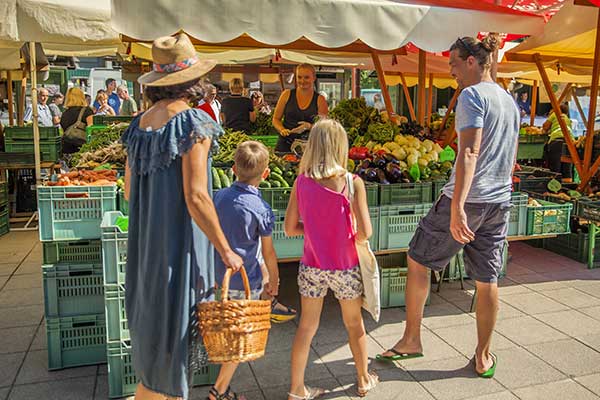
The Problem Is Not That People Do Not Care
It would be easy to say people are hypocrites.
They praise local farmers, then buy the cheapest produce. They applaud farm-to-table restaurants, then choose the chain with easier parking. They share farmers market photos, then forget to shop there. They say they care about sourcing, then never ask the question.
But that explanation is too shallow.
Most people do care. They simply care within the limits of their time, budget, habits, convenience, knowledge, and trust.
That is the real tension.
A person can believe deeply in local food and still default to what is easy. A family can want to support local farms and still feel priced out. A diner can admire a farm-to-table menu and still wonder whether the claim is real. A home cook can buy seasonal produce and still not know what to do with it. A community can celebrate its farmers and still fail to build a dependable market for them.
The gap is not always moral. Often, it is practical.
That is why “support local” is not enough.
Support has to be translated into behavior.
The Values-to-Action Gap
Every movement has a values-to-action gap.
People say they want to be healthier, but they do not always exercise. They say they want to save money, but they still overspend. They say they care about the environment, but convenience often wins. They say they support local businesses, but national platforms make buying easier.
Local food lives inside that same gap.
People want to identify with the values of farm-to-table. They want to feel connected to farmers, land, seasonality, heritage, and community.
But values alone do not create behavior.
Behavior requires access. Behavior requires habit. Behavior requires trust. Behavior requires clarity. Behavior requires repetition. Behavior requires emotional reward.
This is where Cucina sees both the challenge and the opportunity.
The farm-to-table movement has done a strong job making people admire the idea of local food. The next step is helping them act on it.
That is a different kind of work.
It is less about slogans and more about systems. Less about inspiration and more about participation. Less about romanticizing the farm and more about building the bridge from farm to table.
Why “Support Local” Often Fails
“Support local” is one of the most familiar phrases in community marketing.
It sounds good. It feels good. It is hard to argue against.
But it often fails because it is too vague.
Support local how? Support whom? Support when? Support with what purchase? Support at what price point? Support through which restaurant, market, event, or producer?
A phrase can create sentiment without creating action.
That is the weakness.
People may agree with the message and still have no clear next step. And when there is no clear next step, the moment passes.
A strong local food movement cannot rely on general goodwill. It needs specific invitations.
Buy from this producer. Visit this market. Choose this restaurant. Try this seasonal ingredient. Attend this dinner. Ask this sourcing question. Cook this recipe. Bring a friend. Come back next week.
The more specific the action, the more likely the behavior.
That is where Cucina’s role becomes powerful.
Cucina can help turn broad values into practical pathways.
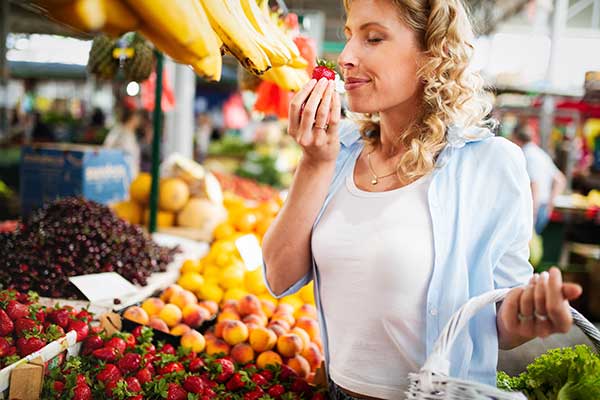
People Want to Feel Good About Local Food Without Feeling Judged
One of the mistakes in food advocacy is making people feel guilty.
Guilt can get attention, but it rarely builds loyalty.
If people feel judged for not buying local enough, cooking well enough, spending enough, or knowing enough, they often pull away.
They become defensive. They feel excluded. They assume farm-to-table is for someone else. They return to what feels familiar.
Cucina’s tone should be different.
The message should not be:
“You are failing local farmers.”
The message should be:
“You already care. Let’s make it easier to act on that care.”
That distinction matters.
People need a welcoming way into the movement. They need permission to start small. They need to understand that supporting local food is not an all-or-nothing identity test.
It can begin with one ingredient. One market visit. One producer story. One restaurant choice. One seasonal dinner. One better question.
The goal is not perfection. The goal is participation.
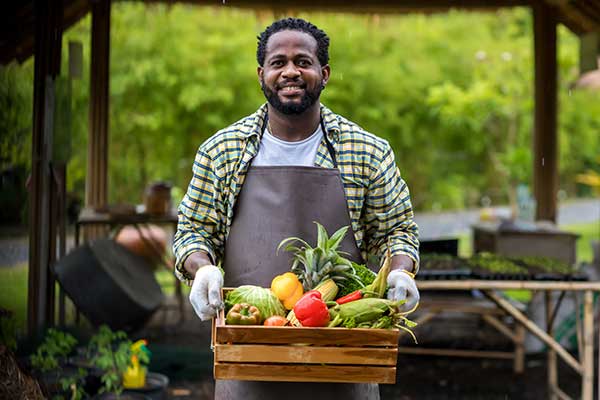
The Hidden Barrier: People Do Not Know the Producers
People support people more easily than they support concepts.
“Local agriculture” is a concept. “Small farms” is a category. “Farm-to-table” is a phrase.
But a farmer with a name, a face, a story, a family, a field, a craft, and a reason for doing the work becomes real.
That changes the emotional equation.
When people know the producer, buying becomes more than a transaction. It becomes a relationship. It becomes a small act of loyalty.
That is why storytelling is not a side activity in local food. It is central infrastructure.
Producer profiles matter. Market introductions matter. Chef-producer collaborations matter. Menu sourcing notes matter. Community dinners matter. Photos, interviews, and origin stories matter.
They reduce emotional distance.
People are far more likely to support a producer they recognize than an abstract cause they admire.
This is one of Cucina’s clearest authority lanes:
Make the producer visible. Make the relationship personal. Make the purchase meaningful.
The Trust Gap Is Real
There is another reason people hesitate to act: they are not always sure what is authentic.
Farm-to-table language has been overused.
Local. Fresh. Seasonal. Artisan. Sustainable. Craft. Farm-inspired. Chef-driven. Farm-to-table.
These words may be sincere. They may also be marketing decoration.
Consumers sense that.
They may not know exactly how to verify a claim, but they know when language feels vague. They wonder whether a restaurant is truly buying from local producers or simply borrowing the glow of the movement.
That uncertainty weakens action.
If people do not know what is real, they may default to what is easy.
This gives Cucina another strong leadership opportunity:
Bring proof to farm-to-table.
That does not mean making the movement rigid or bureaucratic. It means creating clearer standards, better questions, better storytelling, and more visible relationships between producers, restaurants, markets, and consumers.
Who grew it? Where was it grown? How often is it sourced? How does the producer benefit? What does seasonal really mean here? How is the restaurant building local sourcing into its operating model?
People trust what they can understand.
Cucina can help make farm-to-table easier to trust.
Restaurants Need More Than Menu Language
Restaurants play an important role in building local food culture.
A great chef can introduce people to ingredients they might never buy on their own. A thoughtful menu can make seasonal food exciting. A restaurant can become a storytelling stage for producers.
But restaurants also have to move beyond vague menu language.
If a restaurant says it supports local farms, guests should be able to see evidence of that commitment.
That evidence might include producer names on menus, seasonal sourcing features, staff education, farm dinners, chef interviews, supplier spotlights, local purchasing goals, or participation in a recognition program.
This is not only about ethics. It is also smart marketing.
Guests increasingly want meaning behind the meal. They want a story worth remembering and sharing. They want to feel that dining out connects them to place.
Restaurants that genuinely support local producers should not hide that work. They should communicate it clearly and consistently.
Cucina can help create that visibility.
Farmers Markets Need to Become Story Platforms
Farmers markets are often treated as sales venues.
They are that, of course.
But they can also become community storytelling platforms.
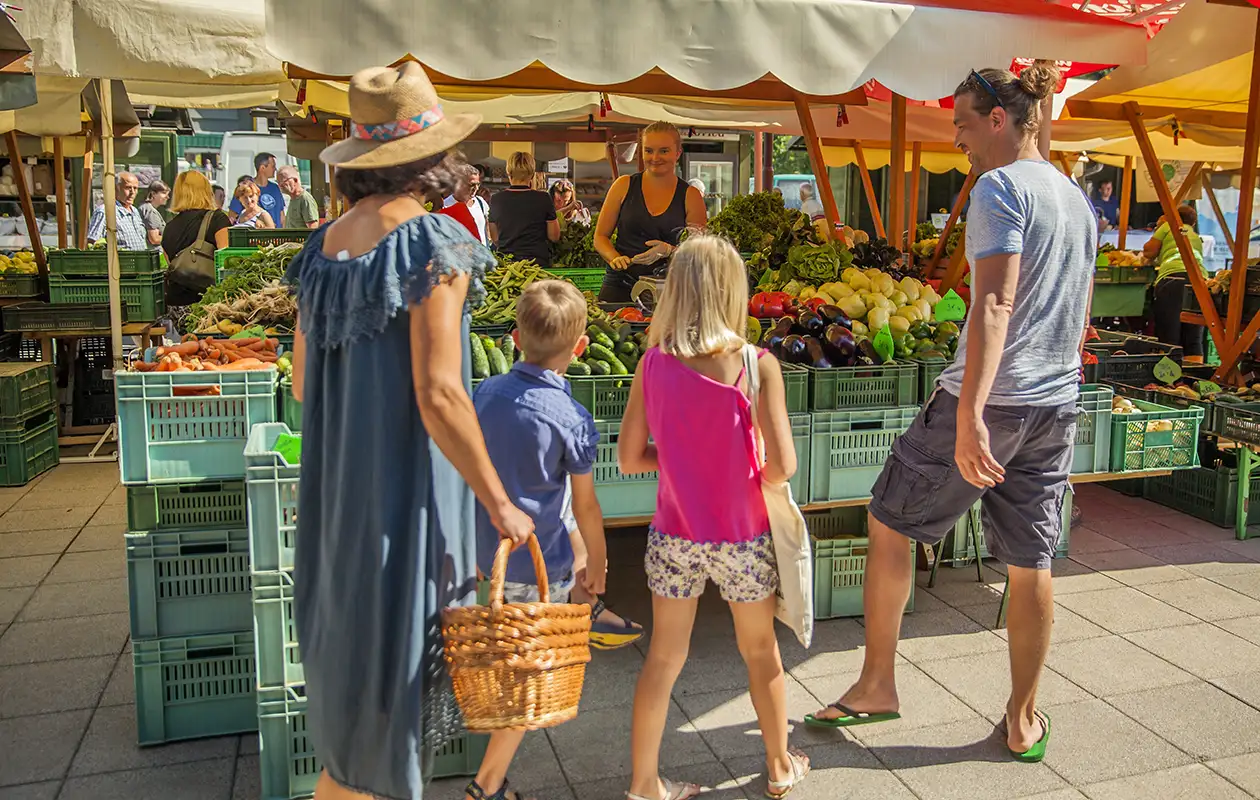
A market is one of the few places where consumers can meet the people who grow, make, bake, raise, harvest, preserve, and prepare food. That is rare and valuable.
Yet many markets underuse this advantage.
They may have strong producers, but limited storytelling. They may attract loyal shoppers, but miss broader community attention. They may offer excellent products, but fail to explain how those products fit into everyday meals. They may be admired culturally, but still not capture enough consistent spending.
Cucina can help markets turn attendance into engagement and engagement into repeat support.
Producer spotlights. Weekly ingredient features. Market dinner collaborations. Recipe cards. Vendor interviews. Seasonal buying guides. Community long-table events. Chef demonstrations. Local food challenges.
These are not just promotional tools. They are participation tools.
They help people move from wandering through a market to building a habit around it.
The Emotional Shift: From Consumer to Participant
The word “consumer” is too passive for the future of local food.
Consumers buy. Participants belong.
That is the emotional shift Cucina can help create.
When someone becomes a participant in local food culture, they do more than make occasional purchases. They begin to see themselves as part of a community food system.
They know producer names. They follow seasonal changes. They attend events. They choose restaurants with intention. They talk about what they bought. They bring friends. They share stories. They feel pride in supporting something close to home.
That pride is powerful.
It changes the behavior from sacrifice to identity.
Instead of “I paid more for local lettuce,” the internal story becomes:
“I know who grew this. I’m part of something that matters.”
That is the emotional lift Cucina should build around.
Local Food Needs Lower Barriers and Higher Meaning
For local food to grow, the movement needs both practicality and poetry.
It needs lower barriers:
Easier access. Clearer information. Better visibility. Simple recipes. More convenient purchasing. Better restaurant communication. Stronger market promotion. Trustworthy recognition.
But it also needs higher meaning:
Connection to place. Respect for producers. Culinary heritage. Seasonal rhythm. Community identity. Stewardship of land and food traditions. A more human relationship with what we eat.
Cucina’s opportunity is to hold both sides.
Not just the romance of local food. Not just the mechanics of promotion.
The bridge between the two.
Because meaning without action becomes nostalgia. Action without meaning becomes another transaction.
Local food needs both.
The Cucina Position: Turn Values Into Behavior
This is where Cucina di Madre Terra can speak with authority.
The strongest position is not simply:
“We support local producers.”
Many organizations can say that.
The stronger position is:
We help communities turn support for local producers into visible, repeatable, meaningful action.
That is a much larger platform.
It gives Cucina a role with producers, restaurants, farmers markets, consumers, caterers, destinations, and local organizations.
It allows Cucina to create producer profile features, farm-to-table restaurant recognition, community dinner series, farmers market storytelling programs, seasonal ingredient guides, local sourcing education, consumer action campaigns, chef-producer collaborations, destination food culture content, and standards for more transparent farm-to-table claims.
This is not just content. It is connective tissue.
Cucina can become the trusted voice helping local food culture move from statement to system.
What Walking the Walk Really Looks Like
Walking the walk does not require someone to change everything overnight.
That expectation is part of the problem.
Real participation can start smaller.
Buy one thing from a local producer every week. Choose one restaurant that names its sources. Ask one question about where an ingredient came from. Visit one farmers market each month. Cook one seasonal meal. Attend one community dinner. Share one producer story. Bring one friend into the experience.
Small actions become habits. Habits become culture. Culture becomes economic support.
That is how local food becomes real.
Not through slogans. Through repeated choices.
Not through admiration alone. Through participation.
The Future of Farm-to-Table Depends on Follow-Through
The farm-to-table movement has inspired people. That matters.
But inspiration is not enough.
If local producers are going to survive and thrive, if restaurants are going to invest in better sourcing, if farmers markets are going to become stronger community anchors, and if consumers are going to build a more meaningful relationship with food, then we have to close the gap between what people say and what people do.
That gap is where the work is.
And it is where Cucina di Madre Terra belongs.
We believe local food deserves more than applause. It deserves action. It deserves trust. It deserves visibility. It deserves systems that make participation easier. It deserves communities willing to turn values into habits.
Because the future of local food will not be determined by how many people say they support local farms.
It will be determined by how many people actually do.
And that begins with one simple shift:
Stop treating local food as something to admire from a distance. Start making it part of how we live.
Cucina’s Authority Statement
Cucina di Madre Terra helps turn local food values into local food behavior by connecting producers, restaurants, markets, chefs, and consumers through storytelling, recognition, education, and community experiences that make farm-to-table easier to trust, support, and sustain.