Cucina di Madre Terra | Local Food Thought Leadership
By Frank Webb, May 10, 2026
Farm-to-Table Became a Status Symbol. It Needs to Become a Community Habit.
Why local food must become more practical, welcoming, and rooted in everyday life.
Farm-to-table began as a powerful idea.
Food should be connected to place. Producers should matter. Ingredients should be seasonal when possible. Restaurants should care where food comes from. Communities should know the people who grow, raise, catch, bake, preserve, and make what they eat.
At its best, farm-to-table is not elitist at all.
It is deeply democratic.
It is about neighbors feeding neighbors. It is about farmers markets, family farms, home kitchens, local restaurants, seasonal meals, shared tables, and communities taking pride in what their region produces.
But somewhere along the way, farm-to-table also became a status symbol.
For some consumers, the phrase now suggests expensive restaurants, precious menus, tiny portions, hard-to-pronounce ingredients, exclusive dining events, and a lifestyle that feels more available to affluent food enthusiasts than ordinary families.
That perception is a problem.
Because if farm-to-table feels intimidating, expensive, or exclusive, many people will admire it from a distance instead of participating in it.
At Cucina di Madre Terra, we believe farm-to-table needs to come back down to earth.
It should still be meaningful. It should still honor producers. It should still celebrate quality, heritage, seasonality, and craft.
But it should also feel practical, welcoming, and accessible.
Farm-to-table should not be a luxury identity.
It should become a community habit.
The Movement Has to Be Bigger Than Fine Dining
Fine dining helped elevate the farm-to-table conversation.
Chefs brought attention to seasonal ingredients. Restaurants introduced consumers to local producers. Beautiful plates gave people a new appreciation for regional food.
That contribution matters.
But local food cannot depend only on upscale dining.
If farm-to-table remains something people experience only on anniversaries, vacations, tasting menus, or special occasions, it will never become a true community food movement.
The future has to include more everyday formats:
A family-style dinner at a farmers market. A community supper built around local produce. A simple recipe using one seasonal ingredient. A chef demonstration that teaches people what to do with market vegetables. A local producer feature in a neighborhood café. A school or club dinner that introduces families to regional food. A market meal where guests meet the grower. A casual long-table event where the food is excellent but the atmosphere is welcoming.
Farm-to-table needs white tablecloths sometimes.
But it also needs picnic tables, market tents, church halls, brewery patios, neighborhood kitchens, farm fields, and community parks.
That is where the movement becomes real.
Many People Feel Priced Out of Their Own Values
One of the hidden frustrations in local food is price.
People may support the idea of local producers but feel unable to make those choices consistently.
They see higher prices and feel conflicted. They want better food but have a budget. They want to support farmers but need to feed a family. They want to attend local food events but assume they cannot afford them. They want to shop at farmers markets but worry the total cost will be unpredictable.
This matters.
If the farm-to-table movement ignores cost sensitivity, it risks becoming a movement that speaks mostly to people who can already afford to participate.
That does not mean local producers should lower prices to unsustainable levels. Producers deserve fair compensation. Quality food has real costs. Small farms and makers cannot survive if consumers expect industrial pricing from human-scale production.
But the movement needs better ways to help people participate at different levels.
Not everyone can dine at a farm-to-table restaurant every week.
But many people can buy one local ingredient. They can attend one community supper. They can learn one seasonal recipe. They can choose one producer at the market. They can split a CSA box. They can support a local bakery, beekeeper, grower, or market vendor when possible.
Participation does not have to be all or nothing.
That message is essential.
Intimidation Is a Real Barrier
Farm-to-table can sometimes make people feel like they are supposed to know more than they do.
They may not know how to cook unfamiliar greens. They may not understand heritage grains. They may feel embarrassed asking what something is. They may not know what to do with seasonal produce. They may assume local food is for chefs, food writers, or people with more time and money. They may feel that the language around food has become too precious.
That intimidation quietly pushes people away.
A person should not need culinary confidence to participate in local food.
They should be welcomed in.
They should be able to ask basic questions. They should receive simple ideas. They should be encouraged to start small. They should feel that local food belongs to them too.
This is where Cucina can bring a different tone.
Educated, but not arrogant. Refined, but not exclusionary. Purposeful, but not preachy. Beautiful, but still practical.
That voice has lift.
It allows Cucina to make farm-to-table feel aspirational and approachable at the same time.
The One-Ingredient Entry Point
One of the simplest ways to make farm-to-table less intimidating is to reduce the size of the first step.
Instead of asking people to change the way they eat, ask them to start with one ingredient.
One bunch of greens. One local tomato. One loaf of bread. One dozen eggs. One jar of honey. One cut of pasture-raised meat. One bag of microgreens. One seasonal herb. One local cheese. One vegetable they have never cooked before.
That is manageable.
A one-ingredient approach lowers the barrier.
It gives people a way to participate without committing to a full lifestyle change. It also creates natural content opportunities: what to buy, how to store it, how to cook it, what to pair it with, who grew it, and why it matters.
This could become a recurring Cucina series:
One Local Ingredient
Each feature could introduce a producer, explain the ingredient, offer a simple preparation, suggest restaurant uses, and invite consumers to buy or try it that week.
That is how behavior starts.
Not with a manifesto.
With dinner.
Community Suppers Can Rebuild the Meaning of Farm-to-Table
One of the strongest anti-elitist formats for Cucina is the community supper.
Not a gala. Not a luxury tasting menu. Not an exclusive chef event.
A generous, welcoming, producer-centered meal.
Community suppers can bring together farmers, chefs, markets, caterers, families, residents, visitors, and local organizations around a shared table.
The format can still be beautiful. It can still be thoughtfully styled. It can still feature excellent food and strong storytelling.
But the emotional tone is different.
It says:
You belong here. This food is part of your community. These producers are your neighbors. This meal is a shared experience, not a status performance.
That is powerful.
Community suppers can create awareness for producers, traffic for farmers markets, content for Cucina, revenue opportunities for partners, and stronger emotional connection among consumers.
They can also make farm-to-table visible in a way that feels more human.
People may forget a slogan.
They remember a table.
Long Table Dinners Should Feel Communal, Not Exclusive
Long table dinners are a natural fit for Cucina, but the positioning matters.
Many long-table events have become premium experiences. There is nothing wrong with that. Beautifully executed culinary events can create value, attention, and revenue.
But Cucina has an opportunity to shape the format differently.
A Cucina long table should feel elevated but welcoming. Curated but not pretentious. Producer-focused, not just chef-focused. Educational but not lecture-driven. Community-oriented, not exclusive.
The table itself becomes a symbol.
It brings people together across producer, chef, guest, market, and community. It turns local food into a shared experience rather than an individual purchase.
The best version is not just “come eat a local dinner.”
It is:
Come meet the people behind the food. Come taste what this season gives us. Come support the market. Come learn something simple you can take home. Come be part of the local food community.
That is farm-to-table with a wider invitation.
Farmers Market Meals Can Make Local Food More Practical
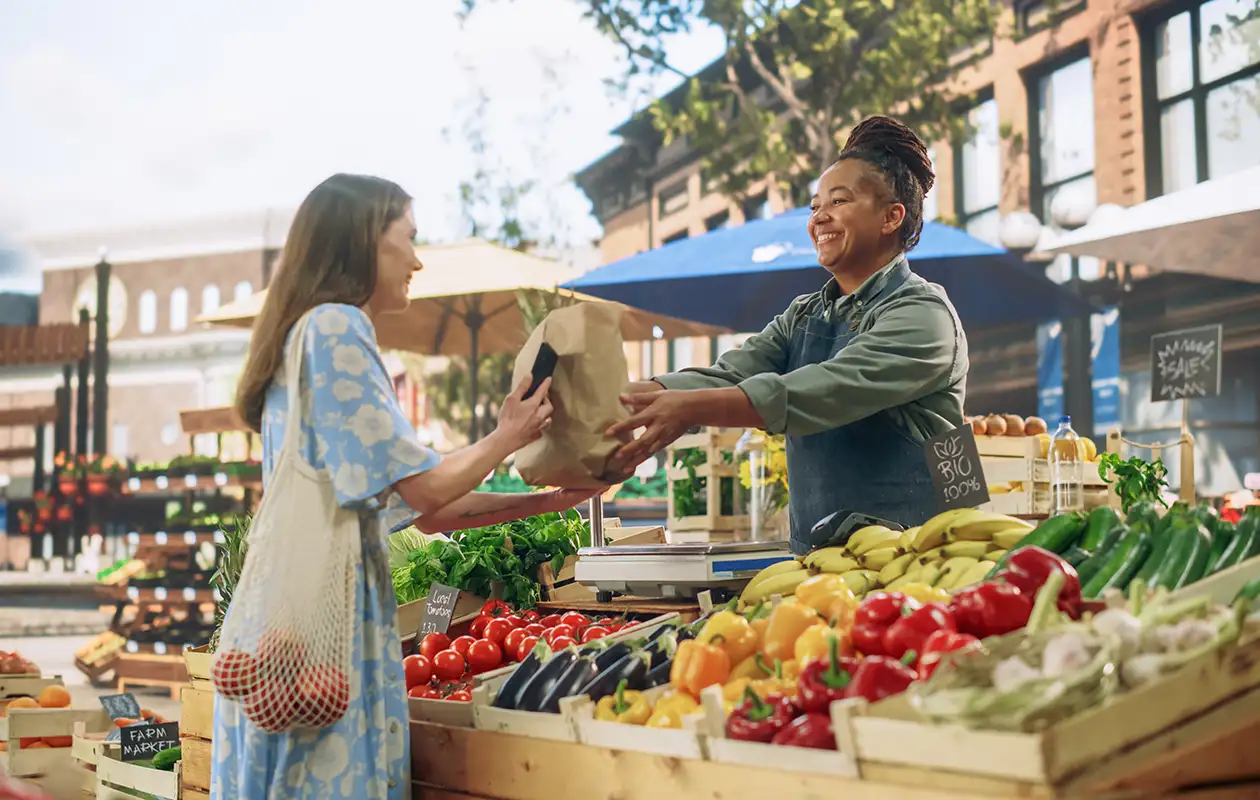
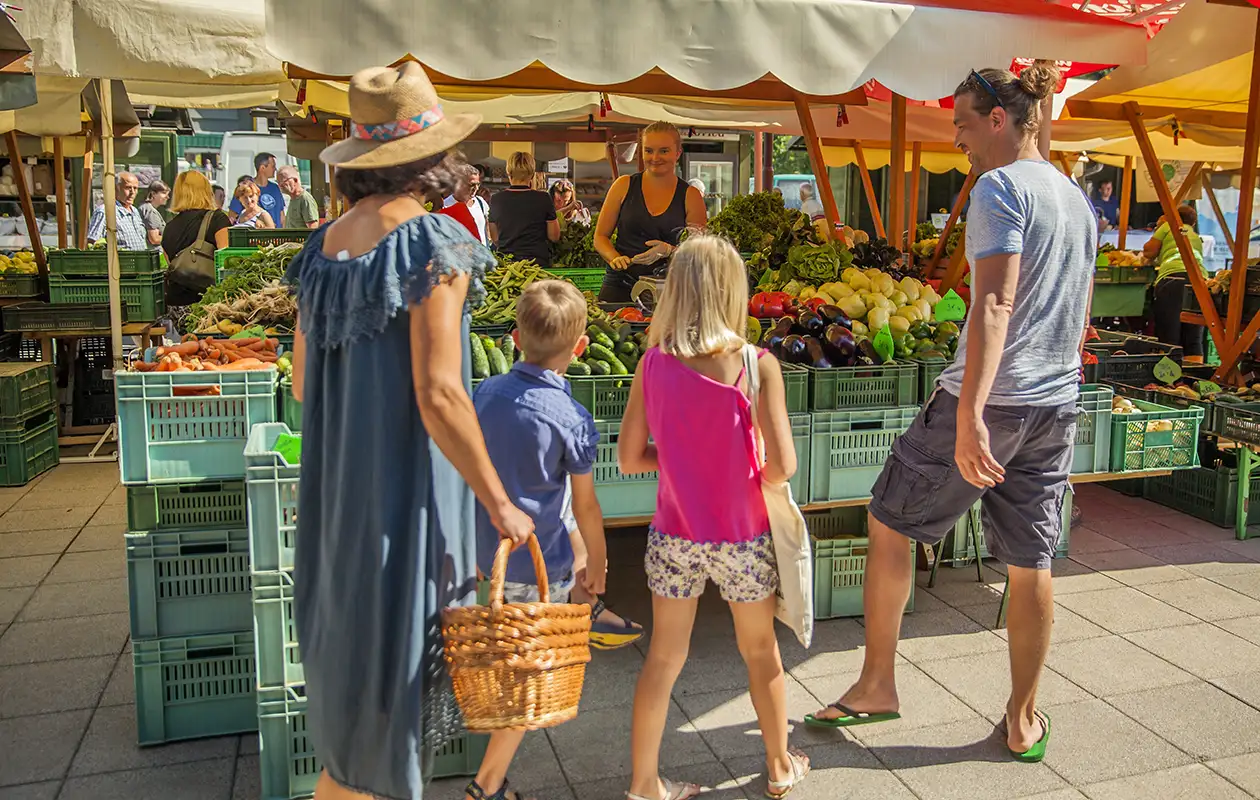
Farmers markets are ideal places to make farm-to-table more approachable.
They already have the producers. They already have community energy. They already have seasonal ingredients. They already have shoppers who are curious.
What they often need is interpretation.
What should someone buy this week? How can they cook it? Which vendors pair well together? What simple meal could be made from the market today? Which ingredients are at their seasonal peak? What local product would make an easy weeknight dinner?
Cucina can help markets answer those questions.
A farmers market meal program could feature simple seasonal combinations using ingredients from multiple vendors.
For example:
Local greens, farm eggs, and artisan bread. Seasonal tomatoes, fresh herbs, and local cheese. Microgreens, mushrooms, and pasture-raised protein. Local honey, fruit, and handmade baked goods. Fresh vegetables with a simple sauce from a local maker.
This turns the market from a browsing experience into a meal solution.
That is important.
People repeat what solves a problem.
If local food helps answer “What’s for dinner?” it has a much better chance of becoming a habit.
Farm-to-Table Education Should Feel Useful, Not Academic
Education is essential, but it has to be approachable.
Many people want to learn more about food, but they do not want to feel like they are being tested.
Cucina can create education that is useful, warm, and practical.
How to use seasonal greens. What to ask at the farmers market. How to build a simple local meal. How to understand producer labels. How to store fresh herbs. How to use microgreens. How to stretch a local purchase across multiple meals. How to choose restaurants that genuinely support producers. How to introduce kids to local food. How to host a simple farm-to-table meal at home.
This is where Cucina can become valuable to consumers, not just inspiring.
The more useful Cucina becomes, the more authority it earns.
The Movement Needs Less Performance and More Participation
Farm-to-table should not become another way for people to perform taste, status, or sophistication.
It should become a way for people to participate in their local food community.
That distinction matters.
Performance asks:
How does this make me look?
Participation asks:
Who does this support? What does this connect me to? How does this strengthen my community? What can I learn? How can I come back?
Cucina should build around participation.
That gives the brand a tone of generosity rather than exclusivity.
It also aligns directly with producers, farmers markets, restaurants, caterers, and local food advocates who need more people involved, not just more people impressed.
The future of local food depends less on elite admiration and more on everyday participation.
Cucina’s Authority Position: Make Farm-to-Table Belong to the Community
This topic gives Cucina a very strong platform:
Farm-to-table should be meaningful without being intimidating, elevated without being elitist, and local without being limited to luxury dining.
That position has real lift because it opens the door to programs, partnerships, and content that serve broader audiences.
Cucina can advocate for a more welcoming local food culture through community suppers, long table dinners, farmers market meals, producer introductions, approachable recipes, and practical education.
This does not cheapen farm-to-table.
It strengthens it.
A movement that only wealthy diners can access is fragile.
A movement that families, residents, visitors, markets, chefs, schools, clubs, and local organizations can participate in is much stronger.
That is the opportunity.
Bring farm-to-table back to the community.
The Future Is Around the Shared Table
The most powerful image for Cucina may not be the perfect plate.
It may be the shared table.
A table where the farmer is known. The chef is respected. The guest feels welcome. The market is supported. The producer is paid. The food has a story. The community has a reason to gather.
That is the anti-elitist future of farm-to-table.
Not less beautiful. Not less thoughtful. Not less meaningful.
More human.
Cucina di Madre Terra can help lead that shift.
Because farm-to-table should not be something people admire from the outside.
It should be something they can join.
Cucina Authority Statement
Cucina di Madre Terra helps make farm-to-table more accessible by creating community-centered experiences, producer-focused storytelling, practical seasonal education, and shared-table programs that invite more people to participate in local food culture.